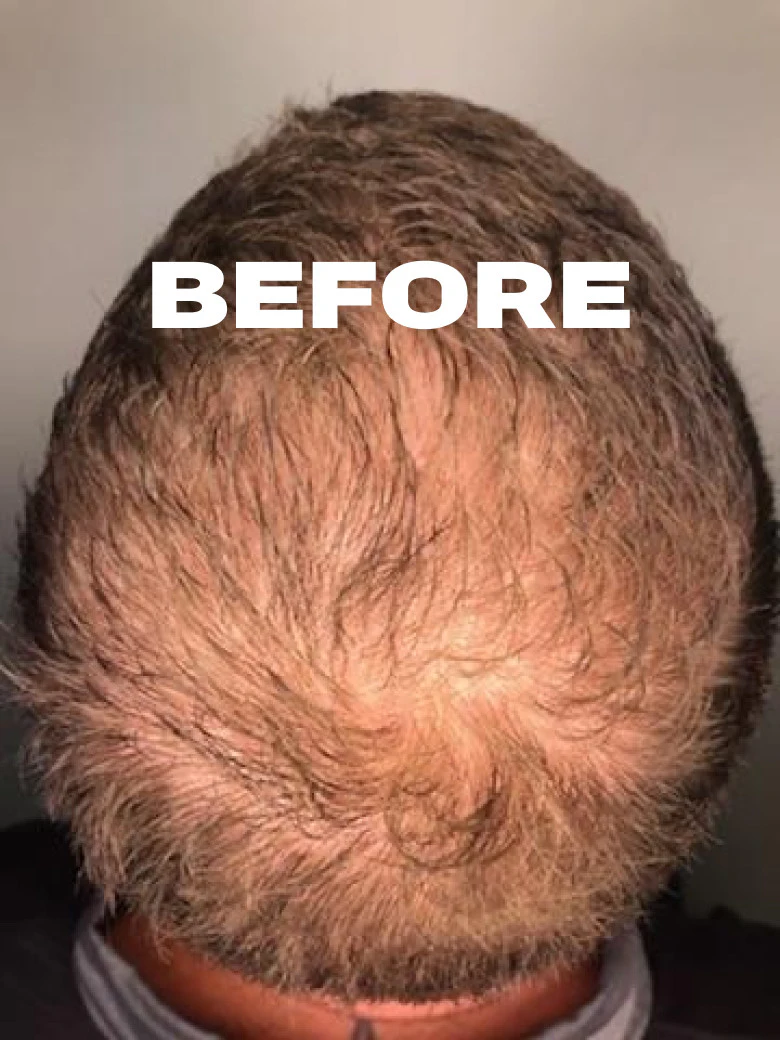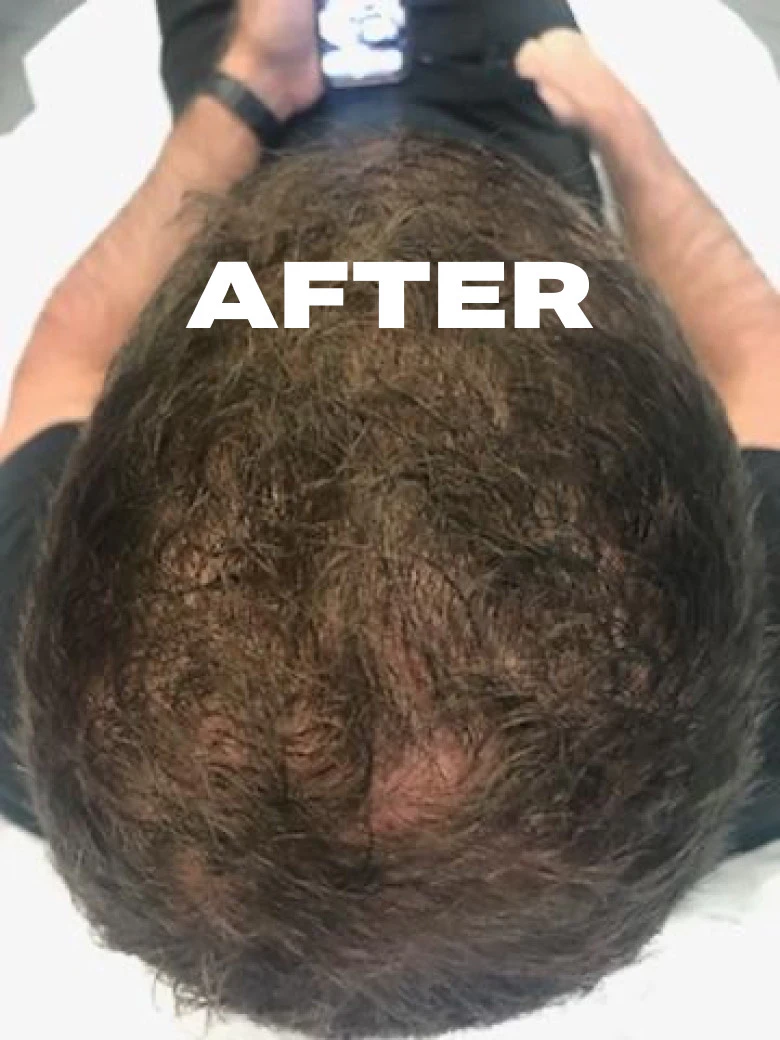
Hair Loss Therapy powered by Stem Cells
Experience the power of stem cells.
Male pattern baldness is caused by DHT, a hormone derived from
testosterone. The good news is, there are options to slow hair loss or
even regain hair growth.
Early on, it's possible to stop or even reverse this hair loss. However,
at a certain point, the hair follicle also loses attachment to the small
muscles in the skin (called the arrector pili muscles). When this
happens, hair loss is permanent.
Finasteride and minoxidil typically take three to four months of daily
use to start seeing visible changes. It can take up to a year to see the
maximum results. As long as you don't experience side effects, it's best
to continue the medication for one full year before deciding on whether
the medication is doing all it can for you. Like all medications,
finasteride and minoxidil will work differently for different people. To
sustain benefits, you have to continue using hair loss medication. If
you stop, your hair loss may return.
WHAT CAUSES HAIR LOSS IN WOMEN?
The way you style and treat your hair can damage your hair follicles. For example, tight ponytails, braids, weaves, and extensions can tug on your hair, leading to traction alopecia (Haskin, 2016). Your diet can also contribute to hair loss, particularly if you're not getting enough vitamins or nutrients, or recently lost a lot of weight (Herskovitz, 2013).
Certain medications and supplements may cause hair loss as a side effect. These include oral retinoids (derivatives of vitamin A), birth control pills, and drugs that treat blood pressure, like beta blockers and captopril (Malkud, 2015). Cancer treatment, such as chemotherapy, may also cause sudden hair loss within a few weeks of starting treatment (Saleh, 2022).
Women who live under extreme stress or experience a traumatic event may notice telogen effluvium, or sudden hair loss, a few months after the event. The trauma can be emotional or physical, such as giving birth, losing a loved one, losing a job, crash dieting, or undergoing surgery (Herskovitz, 2013; Malkud, 2015).
Hormonal changes can also lead to hair loss in women (Grymowicz, 2020). For example, women who recently gave birth may experience postpartum telogen effluvium (Malkud, 2015). As women age and enter menopause, their estrogen levels fall. As a result, hair follicles shrink, which can lead to slower hair growth, thinning hair, and hair loss. At the same time, you may notice hair growth in new or unexpected places, like your face (Grymowicz, 2020). With frontal fibrosing alopecia (FFA), the hair follicles become inflamed and scarred, causing hair loss in the hairline and eyebrows. FFA is more common in postmenopausal women but can affect women of any age (Herskovitz, 2013).