
A herniated disc can turn everyday movements like bending, sitting, or lifting into a source of sharp pain and worry – and one of the first questions most people ask is whether surgery is really the only path forward. The good news is that, for most people, can you fix a herniated disc without surgery has a reassuring answer: yes, in many cases. Research indicates that a large share of herniated discs improve with conservative, non-surgical care, and some shrink or resolve on their own over time. This article walks through what a herniated disc is, why the body’s natural healing process matters, which non-surgical treatments have evidence behind them, how regenerative options like platelet-rich plasma (PRP) and stem cell therapy are being studied as complementary approaches, and the red-flag symptoms that mean surgery should not wait.
What Is a Herniated Disc and What Does It Feel Like?
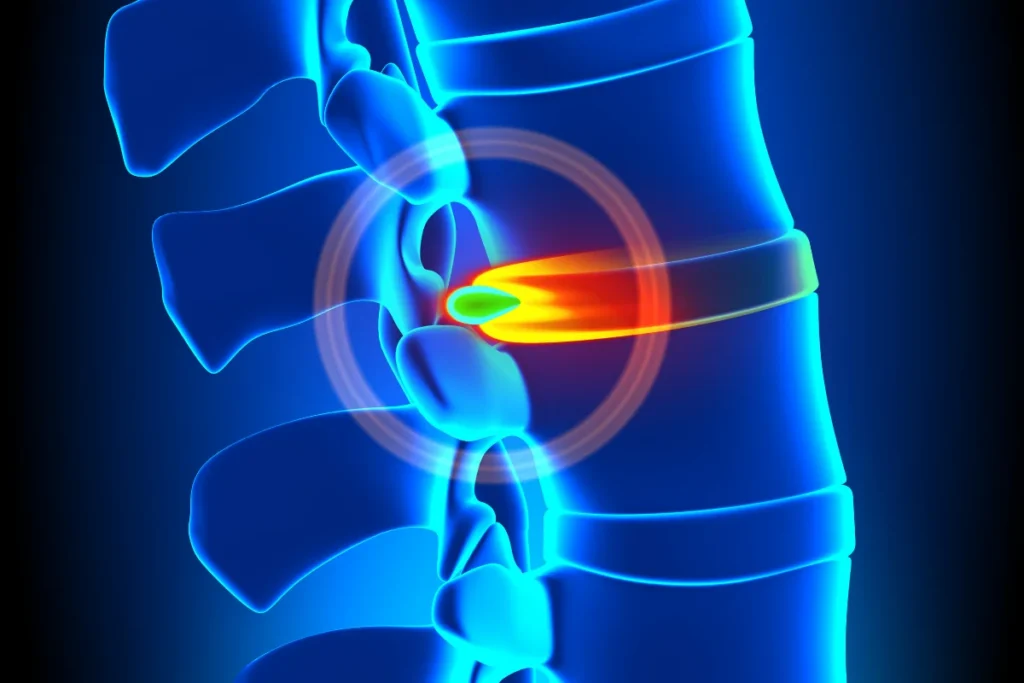
The spine is cushioned by discs – soft, gel-like structures sandwiched between each vertebra that absorb shock and allow flexibility. A herniated disc (also called a slipped or ruptured disc) occurs when the tough outer layer of a disc (the annulus fibrosus) tears or weakens, allowing the softer inner material (the nucleus pulposus) to push outward. This displaced material may press on nearby spinal nerves or the spinal cord itself.
Common symptoms include localized back or neck pain, radiating pain down an arm or leg (sciatica when it involves the lower back and leg), numbness or tingling, and muscle weakness in the affected limb. Symptom severity varies widely – some people have a herniation visible on imaging with no symptoms at all, while others experience significant pain and functional limitation. This variability is one reason clinicians increasingly favor a personalized, evidence-based approach rather than a one-size-fits-all recommendation for every case.
Can a Herniated Disc Heal on Its Own? The Science of Natural Resorption
One of the more encouraging findings in spine research is that herniated discs often shrink or disappear over time without any surgical intervention – a phenomenon known as spontaneous resorption. The body’s immune system appears to recognize the herniated disc material as foreign tissue and gradually breaks it down through inflammatory and neovascular processes, effectively “reabsorbing” the fragment that is pressing on the nerve.
A meta-analysis pooling data across multiple imaging studies found that lumbar disc herniations resorbed in roughly 66-70% of cases followed conservatively, with larger, more displaced (extruded or sequestrated) herniations actually showing a higher likelihood of resorption than smaller, contained bulges (Zhong et al., Pain Physician, 2017). This natural history helps explain why many spine specialists recommend a trial of conservative, non-surgical herniated disc treatment before considering an operation – the disc fragment causing the pain may simply shrink on its own as inflammation resolves and imaging findings improve.
That said, natural resorption is not guaranteed, and timelines vary from a few months to over a year. This is why non-surgical herniated disc treatment approaches are typically layered in to manage pain and function while the body does its work.
Non-Surgical Herniated Disc Treatment: What Actually Helps
For most people with a new or subacute herniated disc, conservative care is the recommended starting point. A combination approach tends to work better than any single intervention alone.
- Activity modification and short-term rest: Prolonged bed rest is discouraged, but avoiding movements that aggravate nerve compression (heavy lifting, deep flexion) while staying gently active supports healing.
- Physical therapy and targeted exercise: Structured exercise programs – particularly those focused on core stabilization and controlled mobility – have been shown to improve pain scores, disability indices, and range of motion compared with no exercise. A 2025 systematic review and meta-analysis of randomized controlled trials found exercise therapy produced meaningful improvements in pain and function with no reported adverse events, supporting its role as a safe, low-cost adjunct in herniated disc treatment non surgical protocols (Du et al., Frontiers in Medicine, 2025).
- Medications: Nonsteroidal anti-inflammatory drugs (NSAIDs), short courses of oral steroids, or nerve-pain medications may help manage symptoms during the healing window, always under a clinician’s guidance.
- Epidural steroid injections (ESIs): For patients with persistent radiating leg or arm pain (sciatica), ESIs deliver anti-inflammatory medication directly near the irritated nerve root. A large evidence synthesis of 72 randomized controlled trials involving over 7,700 patients found that ESIs outperformed other conservative measures for short-term sciatica relief, though benefits tend to fade over the longer term compared with surgery (Brotis et al., Brain & Spine, 2025). For a closer look at this specific symptom pattern, see our guide to non-surgical sciatica treatment.
- Manual therapy and posture-focused care: Chiropractic care, gentle spinal manipulation, and ergonomic adjustments are often used alongside physical therapy, though evidence quality varies by technique.
Used together, these approaches form the backbone of standard non-surgical herniated disc treatment, and many patients see significant improvement within six to twelve weeks.
How Regenerative Therapy May Support Non-Surgical Healing
For patients whose pain persists despite standard conservative care but who want to avoid or delay surgery, regenerative medicine has emerged as an area of active research and clinical interest. These approaches aim to support the disc’s own healing environment rather than simply masking pain.
Platelet-rich plasma (PRP) is derived from a patient’s own blood, concentrated to contain a higher density of growth factors and signaling proteins. When injected into or near a damaged disc, PRP is thought to help modulate local inflammation and support tissue repair processes. Early clinical trials evaluating intradiscal PRP for discogenic low back pain have reported significant improvements in pain and function that were sustained through nearly a year of follow-up (Zhang et al., BioMed Research International, 2022).
Stem cell therapy, particularly using mesenchymal stem cells (MSCs), is being studied for its potential to influence the degenerative cascade within the disc itself – including modulating inflammation and supporting the disc’s structural cells. A systematic review and meta-analysis of clinical studies using intradiscal MSC injections found clinically meaningful improvements in pain and disability scores, with a favorable safety profile and a relatively low rate of subsequent surgery among treated patients (Zhang et al., Frontiers in Bioengineering and Biotechnology, 2023).
It’s important to understand these regenerative options as a complementary, emerging avenue within a broader personalized wellness plan – not a replacement for conservative care or an established alternative to surgery when surgery is truly indicated. Ways2Well’s approach centers on predictive, preventive, and proactive care, using diagnostics and individualized evaluation to determine whether regenerative options are appropriate alongside standard non-surgical herniated disc treatment. Readers whose imaging shows broader disc degeneration alongside a herniation may also find our article on stem cell therapy for degenerative disc disease helpful.
The Evidence at a Glance
The following studies represent some of the more robust, peer-reviewed data behind the non-surgical management of herniated discs:
- Natural resorption: A meta-analysis of imaging studies found lumbar disc herniations resorbed spontaneously in roughly two-thirds of conservatively managed cases, with larger herniations more likely to shrink (Zhong et al., Pain Physician, 2017).
- Exercise therapy: A 2025 meta-analysis of randomized trials found structured exercise improved pain, disability, and mobility scores with no adverse events (Du et al., Frontiers in Medicine, 2025).
- Epidural steroid injections: A synthesis of 72 RCTs (7,701 patients) found ESIs effective for short-term sciatica relief associated with disc herniation, though long-term durability is more limited (Brotis et al., Brain & Spine, 2025).
- PRP for discogenic pain: A clinical trial found intradiscal PRP was associated with sustained pain and function improvement through 48 weeks (Zhang et al., BioMed Research International, 2022).
- Mesenchymal stem cells: A systematic review and meta-analysis found MSC injections were associated with meaningful reductions in pain and disability with a favorable safety profile (Zhang et al., Frontiers in Bioengineering and Biotechnology, 2023).
Taken together, this body of evidence suggests that non-surgical herniated disc treatment – ranging from exercise and injections to emerging regenerative options – has real, research-backed support for many patients.
When Surgery Becomes Necessary: Red Flags You Shouldn’t Ignore
Conservative and regenerative approaches are appropriate for most herniated discs, but surgery is not optional in certain situations. Understanding these red flags is critical.
Emergency red flag – cauda equina syndrome: This rare but serious condition occurs when a large disc herniation compresses the bundle of nerves at the base of the spinal cord. Warning signs include sudden loss of bladder or bowel control, saddle numbness (in the groin, inner thighs, or buttocks), and progressive weakness in both legs. A systematic review examining surgical timing in cauda equina syndrome identified urinary dysfunction and perianal sensory changes as the most commonly reported red-flag symptoms across the literature (Mustafa et al., PLOS ONE, 2023). If any of these symptoms occur, this is a medical emergency – seek immediate care rather than attempting home management or waiting for a scheduled appointment.
Other indications for surgical evaluation:
- Progressive neurological deficits – worsening weakness, numbness, or loss of reflexes despite conservative treatment
- Severe, disabling pain that has not responded to several weeks to months of conservative and regenerative approaches
- Significant, persistent functional limitation affecting work, mobility, or daily activities
Outside of these situations, most patients are appropriate candidates for a structured, non surgical herniated disc treatment plan, ideally guided by a clinician who can monitor progress with follow-up evaluation.
Frequently Asked Questions
Can you fix a herniated disc without surgery?
For many people, yes. Research indicates a substantial proportion of herniated discs improve or resorb with conservative, non-surgical treatment such as physical therapy, activity modification, and targeted injections. Surgery is generally reserved for cases with progressive neurological loss or emergency red-flag symptoms.
How long does it take for a herniated disc to heal naturally?
Timelines vary, but many people notice meaningful improvement within six to twelve weeks of conservative care, while imaging-confirmed resorption may take several months to over a year. Larger herniations sometimes resorb faster than smaller, contained ones.
What is the best non-surgical treatment for a herniated disc?
There is no single “best” option – a combination of physical therapy, activity modification, medication, and sometimes epidural steroid injections tends to produce the most consistent results. Some patients also explore regenerative options like PRP as part of a personalized care plan.
Is stem cell therapy an alternative to disc surgery?
Stem cell therapy for disc conditions is an area of active clinical research and is generally considered a complementary, emerging option rather than an established replacement for surgery in cases where surgery is truly indicated. It may be worth discussing as part of a broader personalized wellness evaluation.
Can exercise make a herniated disc worse?
Appropriately guided exercise, especially core-stabilization and low-impact movement, is associated with improved outcomes and is not generally linked to worsening herniation. Heavy lifting or high-impact activity without professional guidance is best avoided during recovery.
What are the warning signs that I need surgery right away?
Sudden loss of bladder or bowel control, saddle-area numbness, or rapidly progressing leg weakness are emergency red flags associated with cauda equina syndrome and require immediate medical attention, not a wait-and-see approach.
Do epidural steroid injections fix the herniation itself?
No – epidural steroid injections reduce inflammation and pain around the affected nerve, but they do not repair the disc structure. They are often used to manage symptoms while the body’s natural healing process, or additional regenerative and rehabilitative care, takes place.
Are PRP and stem cell injections FDA-approved for herniated discs?
These regenerative approaches remain under clinical investigation for disc-related conditions, and individuals should discuss current evidence, eligibility, and expectations with a qualified healthcare provider before pursuing them.
Key Takeaways
- Many people asking can you fix a herniated disc without surgery can be reassured that conservative, non-surgical care is effective for a large share of cases.
- Spontaneous resorption – where the body naturally shrinks or reabsorbs herniated disc material – occurs in a majority of conservatively managed cases.
- Non-surgical herniated disc treatment typically combines physical therapy, activity modification, medication, and sometimes epidural steroid injections.
- Regenerative options like PRP and stem cell therapy are emerging, complementary avenues under active research, not replacements for standard care or necessary surgery.
- Progressive neurological deficits or cauda equina symptoms (loss of bladder/bowel control, saddle numbness) are emergency red flags requiring immediate surgical evaluation.
Curious whether regenerative options fit into your recovery plan? Explore how stem cell therapy is being studied for musculoskeletal support, or learn more about approaches beyond stem cells at Ways2Well. To discuss your specific situation with a clinician, schedule a consultation today.
References
- Zhong M, Liu JT, Jiang H, Mo W, Yu PF, Li XC, Xue RR. “Incidence of Spontaneous Resorption of Lumbar Disc Herniation: A Meta-Analysis.” Pain Physician, 2017;20(1):E45-E52. DOI: https://doi.org/10.36076/ppj.2017.1.e45
- Du S, Cui Z, Peng S, Wu J, Xu J, Mo W, Ye J. “Clinical efficacy of exercise therapy for lumbar disc herniation: a systematic review and meta-analysis of randomized controlled trials.” Frontiers in Medicine, 2025;12:1531637. DOI: https://doi.org/10.3389/fmed.2025.1531637
- Brotis AG, Spiliotopoulos T, Kalogeras A, Fountas KN, Demetriades AK. “Epidural steroid injections in lumbar disc herniation – Evidence synthesis from 72 randomised controlled trials (RCTs) and a total of 7701 patients.” Brain & Spine, 2025;5:104216. DOI: https://doi.org/10.1016/j.bas.2025.104216
- Zhang J, Liu D, Gong Q, Chen J, Wan L. “Intradiscal Autologous Platelet-Rich Plasma Injection for Discogenic Low Back Pain: A Clinical Trial.” BioMed Research International, 2022;2022:9563693. DOI: https://doi.org/10.1155/2022/9563693
- Zhang W, Wang D, Li H, Xu G, Zhang H, Xu C, Li J. “Mesenchymal stem cells can improve discogenic pain in patients with intervertebral disc degeneration: a systematic review and meta-analysis.” Frontiers in Bioengineering and Biotechnology, 2023;11:1155357. DOI: https://doi.org/10.3389/fbioe.2023.1155357
- Mustafa MA, Richardson GE, Gillespie CS, Islim AI, Wilby M, Clark S, Srikandarajah N. “Definition and surgical timing in cauda equina syndrome-An updated systematic review.” PLOS One, 2023;18(5):e0285006. DOI: https://doi.org/10.1371/journal.pone.0285006
Author: Ways2Well Editorial Team
Reviewed by: Scientific Advisory Board member