
Bursitis is a common source of joint pain that often goes unrecognized or is mistaken for other conditions. When the small fluid-filled sacs that cushion joints – called bursae – become inflamed, the result is localized pain, swelling, and often limited movement. For many people, the condition becomes a frustrating cycle of improvement and flare-up. Understanding what drives it, what treatment for bursitis involves, and where regenerative options like stem cell therapy fit in can open the door to more lasting relief.
What Is Bursitis?
Bursae are thin, fluid-filled sacs located throughout the body, positioned strategically between bones, tendons, and muscles to reduce friction and absorb pressure. The body has over 150 of these structures, concentrated around joints that experience high mechanical demand – the hips, shoulders, knees, and elbows among them.
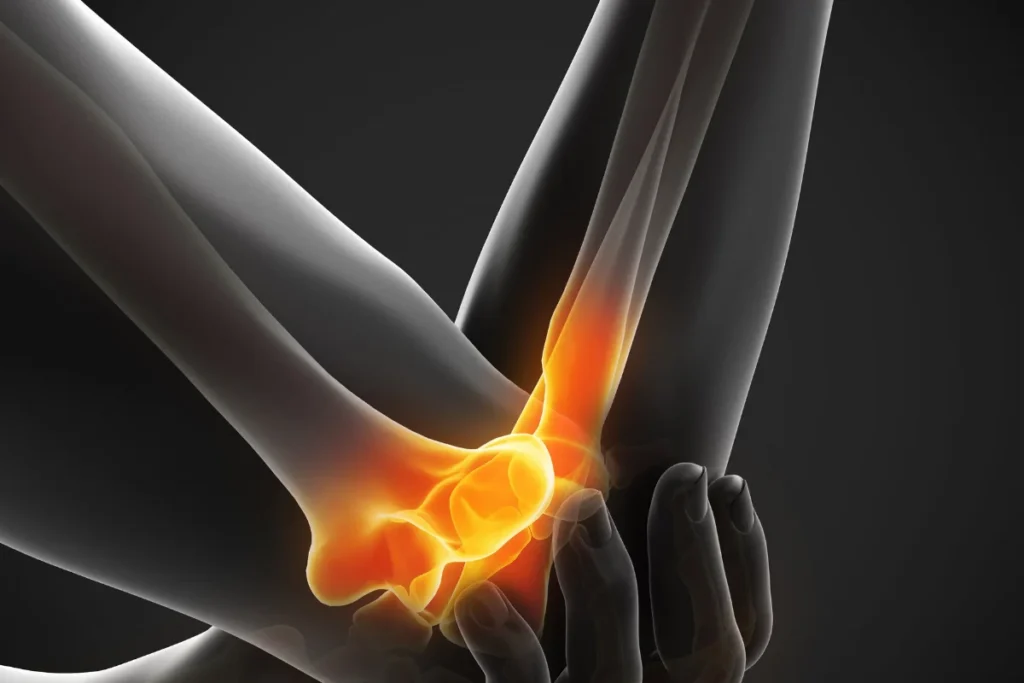
The condition occurs when one of these sacs becomes inflamed, usually in response to repetitive friction, direct pressure, acute injury, or infection. The inflamed sac fills with excess fluid, causing the characteristic pain and swelling.
The most common forms include:
Hip bursitis (trochanteric type) – affecting the bursa over the greater trochanter on the outer hip. This is one of the most frequent presentations, causing pain on the outer hip and upper thigh that is often worse when lying on the affected side.
Shoulder bursitis (subacromial type) – involving the bursa between the rotator cuff tendons and the acromion. Pain typically worsens with overhead activity.
Knee bursitis – the prepatellar bursa (front of the kneecap) and pes anserine bursa (inner knee) are commonly affected.
Elbow bursitis (olecranon type) – swelling over the point of the elbow from prolonged leaning or direct trauma.
What Causes Bursitis?
Repetitive motion and overuse are the most common causes. Activities that repeatedly compress or friction a bursa – such as prolonged kneeling, repetitive reaching overhead, running with poor hip mechanics, or long periods of sitting on hard surfaces – can trigger inflammation.
Direct trauma from a fall or blow can cause the acute form of the condition.
Underlying joint problems including bone spurs, tendon tears, or osteoarthritis can create abnormal mechanics that continuously irritate adjacent bursae.
Inflammatory conditions such as rheumatoid arthritis or gout can trigger joint inflammation as part of a broader systemic flare.
Infections (septic joint infection) can also cause bursae to become inflamed, particularly those close to the skin surface. This form requires specific medical treatment and should be distinguished from mechanical presentations.
Treatment for Bursitis: Conventional Approaches
Most cases respond to a combination of activity modification, inflammation management, and rehabilitation. The goal is to reduce the acute inflammatory response while addressing whatever is causing the bursa to be irritated in the first place.
Rest and activity modification – temporarily reducing movements or positions that provoke pain allows the acute inflammatory response to settle.
Ice applied to the affected area for 15 to 20 minutes several times per day helps reduce swelling in the early stages.
NSAIDs (anti-inflammatory medications) reduce pain and inflammation. They are helpful for short-term management but do not address the underlying cause.
Physical therapy is essential for lasting improvement. For hip presentations, strengthening the hip abductor and external rotator muscles reduces abnormal friction on the trochanteric bursa. For shoulder involvement, rotator cuff and scapular strengthening improves the mechanics that allow tendons and bursae to glide without impingement.
Corticosteroid injections are commonly used when conservative measures alone are insufficient. An injection directly into the inflamed bursa provides temporary but often meaningful pain relief. The effect typically lasts weeks to months and may need to be repeated. However, repeated corticosteroid injections can weaken surrounding tissue over time and are generally used selectively.
Aspiration – drawing excess fluid from a distended bursa – can relieve pressure and discomfort, particularly in cases like prepatellar or olecranon presentations where significant swelling has accumulated.
Stem Cell Therapy and Bursitis: What the Research Suggests
For patients with chronic or recurring joint inflammation that has not responded adequately to conventional treatment, regenerative medicine offers a framework worth understanding.
Stem cell therapy uses mesenchymal stem cells (MSCs) – cells with the potential to modulate inflammation and support tissue repair. In this context, the hypothesis is that MSCs may help regulate the chronic inflammatory signaling that keeps the bursa irritated, creating conditions more favorable for the tissue to settle and recover.
MSCs are thought to exert effects primarily through paracrine signaling – releasing anti-inflammatory molecules and growth factors that influence the local cellular environment rather than simply replacing damaged tissue directly. This mechanism is particularly relevant here, where chronic low-grade inflammation is often the driver of persistent symptoms.
Stem cell therapy is also being studied for adjacent structures commonly involved in these presentations. Rotator cuff tendon changes, hip tendon degeneration, and cartilage wear often coexist with bursal inflammation – and regenerative approaches that address the whole joint environment may offer more comprehensive benefit.
Stem cell therapy for hip bursitis in particular is an area of clinical interest, as the trochanteric form is often associated with underlying gluteal tendinopathy that does not fully respond to injections or physical therapy alone. Addressing the tendon pathology as well as the bursal inflammation may produce more durable outcomes.
PRP (platelet-rich plasma) is another regenerative tool used in adjacent conditions – particularly for the tendon involvement often present alongside joint inflammation. It may be used alongside stem cell therapy or as a complementary approach.
When to Consider Regenerative Treatment
Regenerative options including stem cell treatment are generally appropriate to consider when:
- The condition has been present for more than 3 months despite conservative care
- Multiple corticosteroid injections have provided diminishing benefit
- There is associated tendon degeneration or adjacent tissue pathology
- The patient wishes to explore a less repetitive injection approach
These treatments are generally minimally invasive and are used alongside rehabilitation rather than as replacements for it.
FAQ
Acute cases often respond to a combination of rest, ice, and anti-inflammatory medication. A corticosteroid injection can provide rapid relief for more severe presentations. However, addressing the underlying cause – whether that means strengthening specific muscles, adjusting activity, or treating associated tendon pathology – is what prevents the condition from returning.
Mild acute cases may improve within a few weeks with conservative care. Chronic hip, shoulder, or knee involvement often takes several months to fully resolve, particularly when underlying tendon or biomechanical issues are involved.
Research on stem cell treatment bursitis of the hip shows that MSC-based therapy may help reduce chronic inflammation and support tissue healing – particularly in cases associated with underlying gluteal tendinopathy. It is not a guaranteed cure, and results vary. A thorough evaluation helps determine whether it is an appropriate part of the treatment plan.
Trochanteric bursitis is inflammation of the bursa over the greater trochanter (outer hip). It causes outer hip and thigh pain that often worsens when lying on the affected side. Treatment typically involves physical therapy focused on hip strengthening, activity modification, NSAIDs, and sometimes corticosteroid injection. For persistent cases, stem cell therapy and PRP are emerging as additional options.
With appropriate management, most cases resolve. However, chronic situations – particularly those with associated tendon degeneration – can be persistent and may require more comprehensive treatment. Getting an accurate evaluation early reduces the risk of progression to a chronic state.
Yes. MRI is particularly useful for visualizing bursal inflammation, associated tendon involvement, and any underlying structural issues. It is often the imaging of choice for persistent or diagnostically uncertain hip or shoulder cases.
Key Takeaways
- Bursitis is inflammation of the fluid-filled sacs that cushion joints, most commonly affecting the hip, shoulder, knee, and elbow
- Causes include repetitive motion, direct trauma, underlying joint pathology, and inflammatory conditions
- Conventional treatment for bursitis includes rest, anti-inflammatories, physical therapy, and corticosteroid injections
- Stem cell treatment bursitis research suggests MSC-based therapy may reduce chronic inflammation and support tissue healing, particularly in cases with associated tendon degeneration
- Hip joint inflammation is one area where stem cell therapy is generating clinical interest alongside rehabilitation approaches
- Regenerative options are most relevant for chronic cases that have not responded adequately to conventional care
Conclusion
Bursitis is common, treatable, and in many cases preventable – but when it becomes chronic, it can be genuinely limiting. The right treatment plan goes beyond temporary pain relief to address the underlying mechanics and tissue health driving the inflammation. Ways2Well offers stem cell therapy as part of a comprehensive regenerative medicine approach for musculoskeletal and joint conditions. If you are dealing with chronic joint pain that hasn’t responded to conventional care, schedule a consultation to explore whether a regenerative approach may be appropriate for you.
Sources
- Bursitis: Symptoms and Causes – Mayo Clinic
- Bursitis: Diagnosis and Treatment – Mayo Clinic
- Hip Bursitis – OrthoInfo AAOS
- Bursal Stem Cell Therapy Combined with PRP in Rotator Cuff Surgery – PMC/NIH
Author: Ways2Well Editorial Team
Reviewed by: Scientific Advisory Board member