
Biceps tendinopathy is one of the most common overuse injuries affecting the shoulder and elbow, yet it is frequently misunderstood – and often undertreated. Whether it develops gradually from repetitive overhead activity or accelerates alongside rotator cuff degeneration, the condition rarely resolves on its own without a structured approach. Understanding what causes it, how to recognize the symptoms, and which treatment options are supported by current evidence is essential for anyone dealing with persistent arm or shoulder pain.
This guide covers how this tendon condition works, how its symptoms differ by location, the full treatment spectrum from conservative management through regenerative injection therapy, and realistic recovery timelines for each approach.
What Is Biceps Tendinopathy?
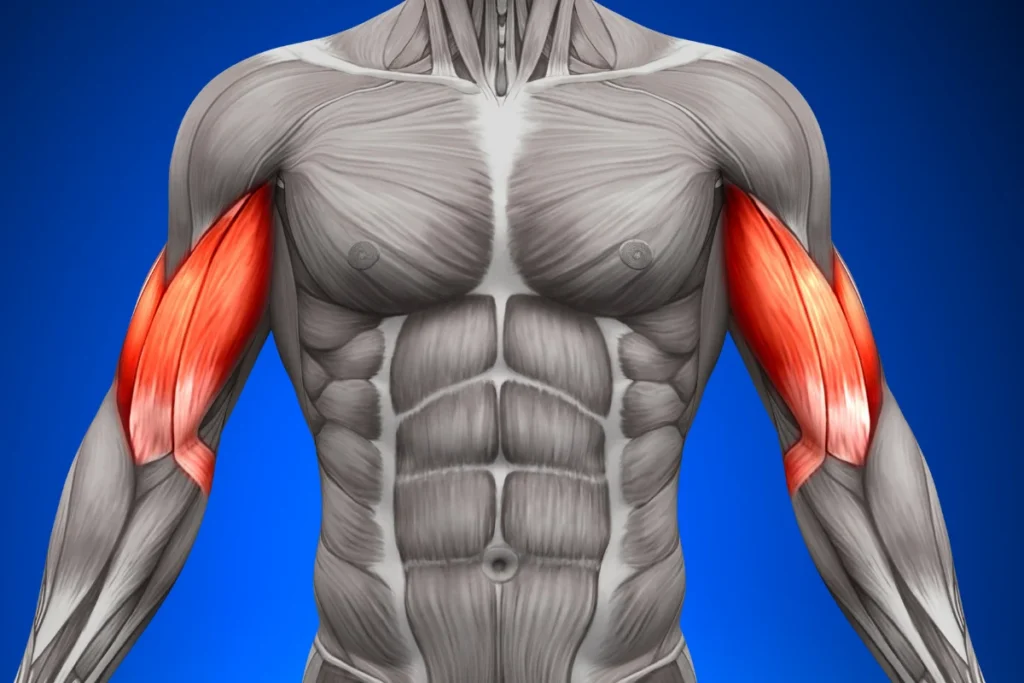
The biceps muscle attaches to the shoulder via two tendons – the long head (proximal) and short head – and to the elbow via the distal biceps tendon. The condition most commonly affects the long head of the biceps tendon (LHBT), which runs through the bicipital groove at the front of the shoulder and is anatomically vulnerable to compression and friction with repetitive movement.
An important and often overlooked distinction: this tendon injury is not the same as tendinitis. A 2022 histopathological study of 45 biceps tendon specimens removed during surgery found that the predominant tissue changes were degenerative – myxoid degeneration and collagen disorganization – while active inflammation was present in only 12 of 45 cases (26.7%) (PMC, 2022). This means the condition is more accurately described as tendinosis (degeneration) rather than tendinitis (inflammation) in the majority of patients.
This distinction has direct treatment implications. Anti-inflammatory medications and corticosteroid injections target inflammation – a process present in fewer than one in three cases. Approaches that address collagen remodeling and tissue repair – such as progressive eccentric loading and platelet-rich plasma – are better aligned with the underlying biology.
Proximal vs. distal presentations: The two forms of the condition differ by location, demographics, and clinical presentation:
- Proximal (LHBT): Affects the shoulder; associated with rotator cuff pathology in up to 93% of cases (PMC, 2022). Common in overhead athletes and adults with concurrent rotator cuff degeneration.
- Distal form: Affects the elbow; peaks in adults aged 40–59, with 70.3% of cases occurring in males on MRI-based cohort data (PMC, 2024). Often identified incidentally on imaging, with 53% of MRI-detected cases asymptomatic.
Biceps Tendinopathy Symptoms
Biceps tendinopathy symptoms vary depending on whether the proximal (shoulder) or distal (elbow) tendon is involved.
Proximal biceps tendinopathy symptoms include:
- Anterior shoulder pain – typically localized to the front of the shoulder along the bicipital groove
- Tenderness to palpation over the bicipital groove
- Pain with overhead activity, resisted elbow flexion, or resisted forearm supination
- Discomfort that worsens with repetitive loading and eases with rest
- Positive findings on Speed’s test (pain with resisted forward shoulder flexion with the elbow extended) or Yergason’s test (pain with resisted forearm supination)
Distal form symptoms include:
- Anterior elbow pain at the biceps tendon insertion
- Pain or weakness with forearm supination (turning the palm upward)
- Aching discomfort with repetitive elbow flexion under load
Red flag: biceps tendon rupture. A sudden audible pop or snap, followed by visible muscle bunching in the upper arm (the “Popeye” deformity) and acute loss of forearm supination strength, indicates a complete tendon rupture rather than tendinopathy. This requires prompt evaluation, as the window for surgical repair is time-sensitive.
Because these symptoms overlap with other shoulder and elbow conditions – including rotator cuff tears, shoulder impingement, and lateral epicondylitis – accurate diagnosis typically requires clinical examination, provocative testing, and imaging confirmation.
Causes and Risk Factors
This tendon condition develops through accumulated mechanical stress that exceeds the tendon’s capacity to remodel and repair. Common contributing factors include:
- Repetitive overhead activity: Swimming, throwing sports, weightlifting, and manual overhead work place recurrent tensile and compressive load on the LHBT
- Rotator cuff pathology: The LHBT is anatomically and functionally linked to the rotator cuff – rotator cuff tears are associated with LHBT tendinopathy in up to 93% of cases (PMC, 2022)
- Age-related degeneration: Collagen cross-linking and tendon vascularity decline with age, increasing vulnerability to degenerative change; distal tendinopathy peaks in the 40–59 age range
- Biomechanical dysfunction: Altered scapular positioning, thoracic stiffness, or muscle imbalance can shift load distribution onto the biceps tendon
Biceps Tendinopathy Treatment
Biceps tendinopathy treatment follows a stepwise approach – from conservative management through injection therapy to surgery – with the goal of restoring tendon function while avoiding or deferring invasive intervention.
Conservative Management: Exercise and Physical Therapy
Physical therapy and progressive tendon loading form the evidence-supported foundation of treatment. An international Delphi study involving expert physical therapists reached ≥89–100% consensus that all five forms of tendon loading – isometric, concentric, eccentric, heavy slow resistance, and task-specific training – are appropriate for this tendon condition (PMC, 2022). Patient education and activity modification reached 100% expert consensus as recommended components.
Eccentric loading – in which the muscle lengthens under tension – is particularly well-supported biologically: it stimulates mechanotransduction and collagen synthesis within the degenerating tendon matrix. A 2024 case protocol demonstrated VAS pain reduction from 8/10 to 0/10 and full ROM restoration within a six-week structured eccentric program (3–5 second lowering phase, 2–3 sessions per week) (PMC, 2024).
Despite this evidence base, physical therapy is significantly underutilized before surgery. A 2024 retrospective cohort of 308 patients who underwent biceps tenodesis or tenotomy found that only 20.1% had attended PT in the two years before their procedure, with a median of just four visits (PMC, 2024). This underutilization represents a substantial missed opportunity to resolve symptoms without surgical intervention.
Corticosteroid Injections – Limited to Acute Flares
Corticosteroid injections can reduce acute pain and inflammation, and are most appropriate for short-term flare management. However, a 2025 systematic review and meta-analysis comparing PRP and corticosteroid injections across 27 RCTs found that while corticosteroids act faster at one month, PRP demonstrates superior outcomes from three to six months onward across multiple tendinopathy conditions (PMC, 2025). Repeated corticosteroid use carries a risk of tendon degeneration – particularly relevant given that the underlying pathology is already degenerative in most patients.
PRP and Regenerative Approaches
Platelet-rich plasma (PRP) therapy aligns with the degenerative biology of this condition more directly than corticosteroids. By delivering concentrated growth factors – including PDGF, TGF-β, and VEGF – directly to the tendon, PRP stimulates collagen synthesis and supports tissue remodeling in a way that corticosteroids do not.
A 2025 systematic review and meta-analysis of 30 RCTs involving approximately 2,500 patients found that PRP reduced pain more than 20% beyond control groups at the three-to-six month mark, with 15–20% superior functional improvement (PMC, 2025). This evidence base – though largely drawn from shoulder and rotator cuff tendinopathy studies – directly supports PRP’s role in the broader tendinopathy spectrum given shared pathophysiology.
Peptide therapy and stem cell therapy represent additional evolving options in regenerative orthopedic care, with growing preclinical and early clinical evidence for tissue repair in tendon-related conditions.
Surgery – When Conservative Care Is Not Sufficient
Surgical intervention is typically considered after three to six months of structured conservative management without adequate improvement. The two main procedures are tenodesis (reattaching the biceps tendon to the humerus at a new anchor point) and tenotomy (releasing the tendon entirely). A 2022 meta-analysis of 9 RCTs involving 572 patients found that tenodesis produced superior elbow flexion strength at 12 months (+3.67 kg, p=0.006), better forearm supination, and significantly less Popeye deformity at 24 months (OR 0.19, p<0.001). Tenotomy provided earlier pain relief at three months (PMC, 2022). Tenodesis is generally preferred for younger, active patients who prioritize functional recovery over early pain relief.
Biceps Tendinopathy Recovery Time
Recovery timelines vary substantially depending on the treatment path chosen:
Treatment | Initial Response | Full Recovery / Return to Activity
Conservative care (PT + eccentric loading) | 4–6 weeks | 3–6 months
Corticosteroid injection | 1–2 weeks (symptom relief) | No structural improvement
PRP injection | 4–8 weeks | 3–6 months
Surgical tenodesis | 8–12 weeks (light activity) | 6 months (full return to sport)
These timelines apply to typical presentations; individual recovery depends on damage severity, adherence to rehabilitation, age, and systemic health factors including metabolic function and chronic inflammation status.
When to Seek an Evaluation
Most patients with this diagnosis are appropriate candidates for conservative and regenerative care. Consider seeking evaluation if you have:
- Shoulder or elbow pain lasting more than four weeks without improvement
- Pain that limits daily activities, overhead function, or sport performance
- Symptoms that have not resolved with rest and home management
Red flags requiring urgent imaging include: sudden onset of weakness, an audible pop during activity, or visible arm deformity (Popeye sign), which may indicate tendon rupture.
A thorough evaluation should include functional assessment, imaging review, and – given the systemic contributors to tendon degeneration – comprehensive blood work to identify underlying factors such as chronic inflammation, hormonal imbalance, or metabolic dysfunction that can impair tendon healing regardless of the local treatment approach.
Frequently Asked Questions
What is biceps tendinopathy?
Biceps tendinopathy is degeneration of one of the biceps tendons – most commonly the long head of the biceps tendon at the shoulder, or the distal biceps tendon at the elbow. Despite the common use of the term “tendinitis,” histopathological studies show that active inflammation is present in fewer than 27% of cases; the condition is predominantly degenerative (tendinosis). This distinction informs treatment selection: approaches targeting collagen repair and tissue remodeling are better aligned with the underlying biology than anti-inflammatory strategies alone.
What are the symptoms of biceps tendinopathy?
Biceps tendinopathy symptoms vary by location. Proximal (shoulder) presentations typically involve anterior shoulder pain, tenderness over the bicipital groove, and pain with overhead activity or resisted supination. Distal (elbow) presentations cause anterior elbow pain and weakness with forearm supination. Both forms worsen with activity and ease with rest. A sudden pop with visible muscle bunching in the arm (Popeye deformity) suggests tendon rupture rather than tendinopathy and warrants urgent evaluation.
How is biceps tendinopathy treated?
Biceps tendinopathy treatment begins with conservative management: structured physical therapy with progressive tendon loading (isometric, eccentric, concentric), activity modification, and patient education – all supported by international expert consensus. When conservative care is insufficient, PRP injection may be considered, with evidence from a 2025 meta-analysis of 30 RCTs showing superior outcomes to corticosteroids from three to six months onward. Surgery (tenodesis or tenotomy) is typically reserved for cases failing to respond after three to six months of structured conservative management.
How long does biceps tendinopathy take to heal?
Recovery depends on the treatment approach. Structured eccentric therapy typically produces measurable improvement within four to six weeks, with full recovery over three to six months. PRP therapy shows initial response at four to eight weeks, with full effect around three to six months. Surgical tenodesis requires eight to twelve weeks before return to light activity and approximately six months before full return to sport. Individual timelines vary based on severity, adherence, and overall metabolic health.
Is PRP effective for biceps tendinopathy?
PRP may be an effective option for tendon degeneration of this type, particularly when conservative management has not produced adequate improvement. A 2025 systematic review and meta-analysis of 30 RCTs involving approximately 2,500 patients found PRP produced more than 20% greater pain reduction than controls at three to six months, with 15–20% superior functional improvement. PRP’s mechanism – delivering growth factors that stimulate collagen synthesis – is directly aligned with the degenerative pathophysiology underlying most biceps tendinopathy cases.
Can biceps tendinopathy heal without surgery?
For most patients, the condition can improve or resolve with non-surgical management. A 2024 retrospective cohort study found that only 20.1% of patients who eventually underwent biceps surgery had attended physical therapy in the prior two years – suggesting that surgery is frequently performed before adequate conservative care has been tried. Guidelines recommend structured PT, with or without injection therapy, for a minimum of three to six months before surgical options are considered.
Key Takeaways
- This is primarily a degenerative tendon condition (tendinosis), not inflammatory – histopathology data shows inflammation in fewer than 27% of cases; this explains why corticosteroids offer limited long-term benefit
- Biceps tendinopathy symptoms differ by location: anterior shoulder pain (proximal/LHBT) vs. anterior elbow pain with supination weakness (distal); red flags for rupture include sudden pop + Popeye deformity
- LHBT tendinopathy is associated with rotator cuff pathology in up to 93% of cases – comprehensive shoulder evaluation is essential
- Biceps tendinopathy treatment should start with structured PT and progressive eccentric loading (89–100% international expert consensus); only 20.1% of surgical patients had prior PT – a significant underutilization gap
- PRP is supported by a 2025 meta-analysis of 30 RCTs showing >20% superior pain reduction vs. controls at 3–6 months; superior to corticosteroids mid-term
- Surgery (tenodesis preferred over tenotomy for active patients) is appropriate after 3–6 months of failed conservative care; recovery timeline: 6 months to full return to sport
Ready to Explore Your Options?
If you are experiencing shoulder or elbow pain consistent with biceps tendinopathy, schedule a consultation with Ways2Well – and get a personalized evaluation that includes functional assessment, imaging review, and a regenerative care plan tailored to your specific presentation.
References
1. “Histopathology of the long head of the biceps tendon removed during tenodesis demonstrates degenerative histopathology and not inflammatory changes.” BMC Musculoskeletal Disorders, 2022. URL: https://pmc.ncbi.nlm.nih.gov/articles/PMC8882305/
2. “Management of proximal biceps tendon pathology.” World Journal of Orthopedics, 2022. URL: https://pmc.ncbi.nlm.nih.gov/articles/PMC8771414/
3. “Tendinopathy of the Distal Biceps Tendon is a Common Incidental Finding on Magnetic Resonance Imaging of the Elbow.” Archives of Bone and Joint Surgery, 2024. URL: https://pmc.ncbi.nlm.nih.gov/articles/PMC11519423/
4. “Physical Therapy Interventions for the Management of Biceps Tendinopathy: An International Delphi Study.” International Journal of Sports Physical Therapy, 2022. URL: https://pmc.ncbi.nlm.nih.gov/articles/PMC9159730/
5. “Physical Therapy Utilization Prior to Biceps Tenodesis or Tenotomy for Biceps Tendinopathy.” International Journal of Sports Physical Therapy, 2024. URL: https://pmc.ncbi.nlm.nih.gov/articles/PMC11534157/
6. “Rehabilitation With Eccentric Training Using Kettlebell and Kinesio Taping in a Young Volleyball Player With Proximal Biceps Tendinopathy: A Case Report.” Cureus, 2024. URL: https://pmc.ncbi.nlm.nih.gov/articles/PMC11262752/
7. “Platelet-rich plasma and corticosteroid injection for tendinopathy: a systematic review and meta-analysis.” BMC Musculoskeletal Disorders, 2025. URL: https://pmc.ncbi.nlm.nih.gov/articles/PMC11980122/
8. “Effectiveness of Platelet-Rich Plasma in Treating Rotator Cuff Tendinopathy: A Systematic Review and Meta-Analysis.” Journal of Orthopaedic Case Reports, 2025. URL: https://pmc.ncbi.nlm.nih.gov/articles/PMC11907138/
9. “Tenodesis yields better functional results than tenotomy in long head of the biceps tendon operations – a systematic review and meta-analysis.” International Orthopaedics, 2022. URL: https://pmc.ncbi.nlm.nih.gov/articles/PMC9001564/
10. “Physical therapy interventions used to treat individuals with biceps tendinopathy: a scoping review.” Brazilian Journal of Physical Therapy, 2024. URL: https://pmc.ncbi.nlm.nih.gov/articles/PMC10825607/
Author: Ways2Well Editorial Team
Reviewed by: Scientific Advisory Board member